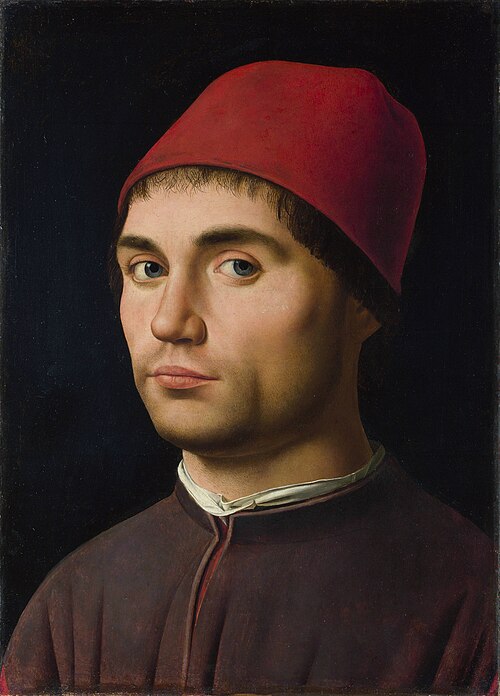
“Who am I, Gamling?” King Théoden asks of his lieutenant in a calm-before-the-storm moment of hopelessness and self-doubt.
I like to consider my identity as that of a Renaissance Man of the People. This may be considered a compound epithet merging, of course, the phrases Renaissance Man and Man of the People. A Renaissance Man is someone invested in a broad range of interests, most often including writing, music, language, science, and health. I write essays and poetry, play saxophone in a band, read Spanish literature, engage with both hard and soft sciences, and generally live a hearty lifestyle of diet and exercise. A Man of the People is someone who understands and connects with the common man. For me, this was almost entirely a function of being poor (which humbles the ego quite quickly). I wholeheartedly believe that we are all more similar than we are different and that differences are largely the product of factors beyond our control. To think oneself better than another, or to discount one’s privilege and sheer luck, is folly.
Conversely, the self-doubt of my identity is a paradoxical failure to engage. I am a writer, but I do not write; I play saxophone, but I do not practice; I read Spanish, but I do not speak it; and so on. Hence, when I ask myself, “Who am I?”, I want to spit out the distaste of this existential paradox: I do not want to be a writer who does not write. However, because I recognize I am the product of my actions, this sour, conflicting identity will fester inside me until I choose to be a writer who writes.
We now find ourselves at the dangerous intersection of personal choice and external pressure with only a single, short-lived, impatient crosswalk to hurry us to the other side before the onslaught continues, mowing us down.
I am not alone in denying myself the things that fulfill me. Do we do this simply because they require an active, above average amount of effort? Why do we persist in our stubbornness despite knowing that the things most worth doing require that effort? Oughtn’t we be able to grow that commitment to effort with training? Let us examine.
Acting only when we feel motivated is a surefire way to inaction. At the opposite extreme, however, we become automatons doomed with capitalistic maximization of efficiency. While yes, we must oblige ourselves to put in effort, ‘laziness’ (i.e. relaxation, leisure) is also fundamentally human. Like many things, the disorder is an imbalance. Like nutritionally-void candy and ice cream, indulging in unfulfilling instant gratifications, or passive pleasures, makes us sick1. While, yes, inspiration can come from watching TV, unless it is something ‘worthwhile,’ the feeling of wastefulness accumulates with each episode. (Of course, this depends on the context. For example, if you’re wanting to become a television writer, actively studying TV shows may not be wasteful, but useful).
In the words of a wise wizard, all we have to decide is what to do with the time that is given us. Fundamentally, life satisfaction boils down to this balance: the ratio of our time committed to fulfilling activities versus unfulfilling ones. An artful, meaningfully-lived life seeks to increase the ratio while recognizing that each extreme yields madness.
A third of our lives are (ideally) committed to sleep (8 hours per day divided by 24 hours in a day). It is the great indictment of society that half of our remaining time, our waking hours, is wasted in unfulfilling jobs necessary to cover the ‘cost of living’. The Modern Fall of Man is Now: stripped of agency, all we’re left with is having to decide what to do with the precious remaining third, subject to pitiless and relentless waves of responsibility. This is your life, or, more precisely, where it happens. It is no wonder why so many of us are overwhelmed and unsatisfied, and it is not our fault, for after all these responsibilities we’re (maybe) left with just a handful of hours with which we’re expected to find inner satisfaction tinkering with the ratio of fulfilling to unfulfilling activities.
There are (a) few things we can do. The first is to delete the apps and spend as little time on our phones as possible. You won’t regret it. Next, we can take advantage of opportunities to stack fulfilling activities. Examples include listening to an audiobook while going for a run or connecting with loved ones while preparing a meal together. Lastly, with the most potential to recapture our time, we can choose fulfilling careers in medicine, research, activism, etc.2
Who we are is a function of our choices (plus the circumstances of our birth3), and we must choose to engage with our uniquely identified fulfilling activities if we are to have any chance at life satisfaction. It is never too late to engage: I find myself in a career position starkly similar to that I was in several years ago, now with a demon taunting me that the education I’d pursued since then didn’t matter. I could wallow, or I could engage and build the future I want.
- Instant versus delayed gratification and active versus passive pleasure both fail to encapsulate quite what I mean, due to edge cases. Therefore, my preferred dynamic is fulfilling versus unfulfilling activity. The former terms are used to orient the reader toward the fulfilment philosophy. ↩︎
- While I am a proponent of following your dreams, one must have a voracious devotion to it for any chance of career success. For most people, this passionate, committed devotion only comes about later in life after serious self-reckoning. We therefore often find ourselves stuck back in the vicious cycle of needing an unfulfilling job while we hone our craft, though this time hopefully with the recognition of the need to pursue that craft. ↩︎
- These circumstances, obviously, limit our choices. The fulfillment quest is to engage to whatever extent we can despite these limitations, though, obviously, that is easier said than done: the point of this essay is not to delve into discussions of systemic oppression, but to reflect with the purpose of aiding the quest. ↩︎


Leave a Reply